A possible direction
Onboarding kits for creator teams
Give an agency and creator one shared route through asset intake, access, review and delivery.
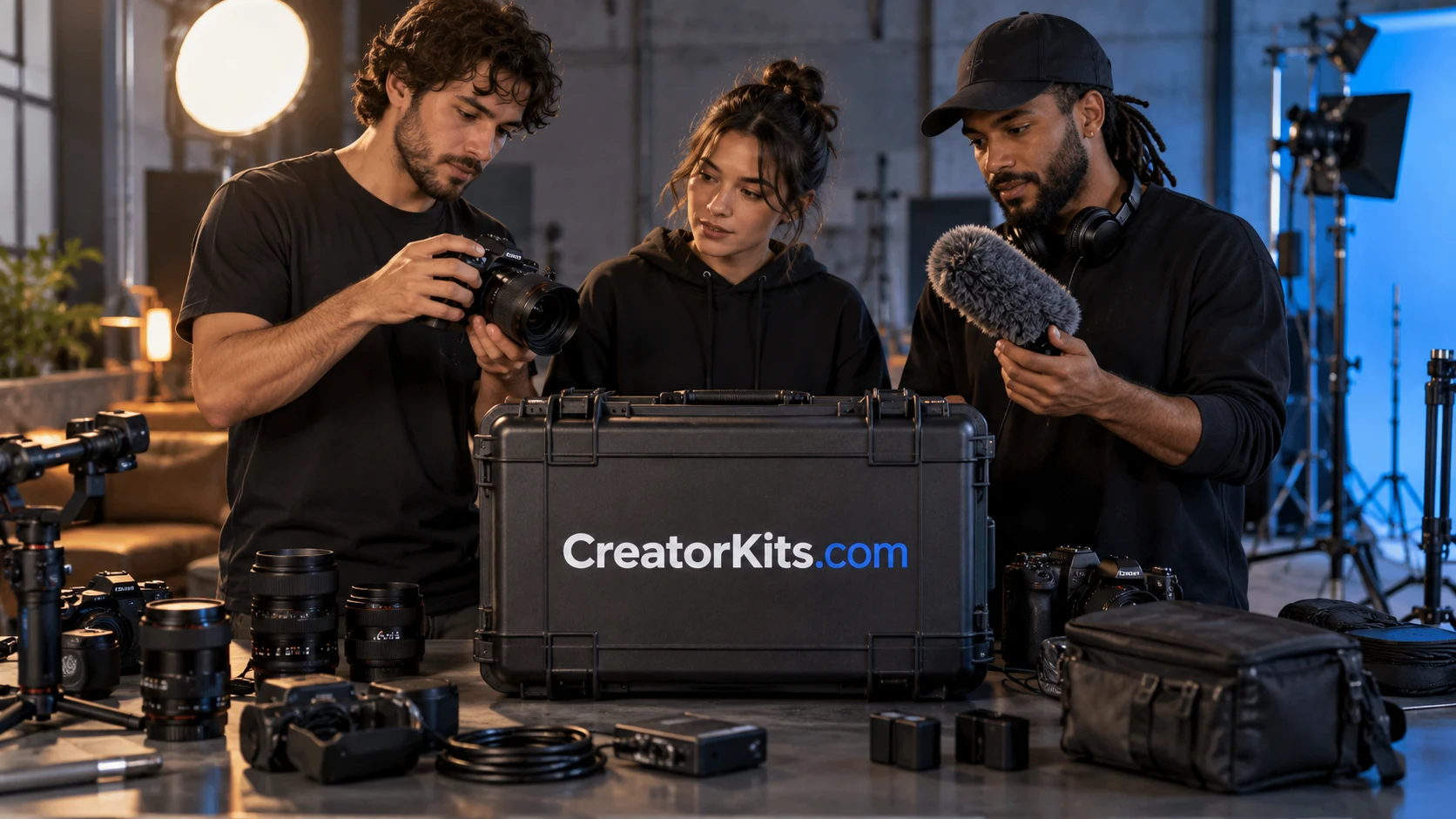
The first week of a creator collaboration can disappear into small unanswered questions. Where should raw footage go? Who can approve an edit? Which brief is current? CreatorKits.com could become a home for onboarding packs that help small agencies and creator teams establish a working arrangement before production begins. The scenario below is an illustrative business concept, not a service operating on this site.
Choose one kind of collaboration
A useful first customer could be a small agency managing recurring sponsored videos with independent creators. The agency needs consistent intake, while each creator needs enough context to produce the right material without joining every internal conversation. The pack should make the shared work understandable without exposing unrelated client information or burying important instructions in a long welcome document.
The first offer could be an onboarding pack for one campaign type. It might include an intake form, an asset checklist, a brief template, a review map and a delivery checklist. Keep the offer narrow enough to demonstrate with one fictional campaign. A pack for a recurring video partnership will need different examples from one for a single event photographer or a live-stream host.
Start with responsibility, not a welcome message
List the people who make decisions. One person owns the brief, one collects assets, one gives consolidated feedback and one confirms delivery. The same person may hold more than one role in a small team, but the document should still say which decision belongs where. “Ask the team” is a weak instruction when a creator has two conflicting messages and a recording session in an hour.
The opening sheet can identify the campaign contact, approval contact, working folder and current brief. Add a clear method for reporting a blocker. A missing product sample, an unavailable location or a contradictory instruction should have a visible route back to someone who can decide what changes. This is more useful than a general instruction to communicate proactively.
Treat rights as an intake question
A pack can prompt the parties to identify the agreement that governs the work and record where the approved version is stored. It can ask who is responsible for checking music, images, logos and other supplied material. It should not pretend that a generic checkbox settles permission to use someone’s work. Actual terms need to match the real collaboration and receive appropriate professional review where necessary.
Keep commercial agreements separate from the daily production checklist. A creator needs to know where to find the relevant agreement and whom to ask about uncertainty. An editor needs to know which assets are approved for the planned use. Recording those references is an operational task; deciding what rights exist is a separate question. A kit should make that distinction visible rather than hiding it under a broad “all cleared” label.
A worked agency handoff
Imagine a fictional campaign for a desk accessory. The agency provides the approved brief and product facts. The creator confirms receipt of the product, uploads a proposed outline and identifies any practical filming constraint. The agency’s named reviewer returns one consolidated set of comments. The creator then uploads a draft to the review folder, using a filename that includes the campaign code and version.
The final checklist asks whether the approved file, caption text, thumbnail and agreed credits are present. It also records the approval reference and any unresolved item. That does not guarantee campaign performance. It creates a clearer record of what was handed over and what still needs a decision. The example should show a revision, because a kit that only works when everything goes right offers little help during normal production.
Design access around the actual work
An agency should avoid giving a new collaborator access to an entire archive when one campaign folder is enough. Google’s official sharing guide explains view, comment and edit access and the inheritance of folder permissions. Those mechanics matter when creating a sample folder arrangement. A review-only collaborator may need a different role from someone uploading working files.
Make access testing part of onboarding. Open the link using an account with the intended role and check whether the person can complete the task. Do not rely on the folder owner’s view. Include a closing step to review access when the collaboration ends. The kit can supply a checklist, but the agency remains responsible for applying it to the actual accounts and retention requirements.
Keep the pack short enough to maintain
Each document needs an owner and a revision date. The campaign brief may change more often than the general upload instructions. Separate them so a change in one does not create several competing copies of the other. A central start page can link to the current documents and explain what is campaign-specific. Archived versions should be clearly marked and kept away from the default route into the work.
For the instructions, use meaningful headings and explicit labels. W3C’s guidance on structured content explains why logical sections support navigation. In this context, headings such as “Send the first draft” and “Resolve review comments” are easier to act on than decorative phrases. Include text instructions alongside any walkthrough video so the core process can be reviewed quickly.
Pilot with a real pair of collaborators
A credible distribution path starts with one agency and one creator testing a sample campaign from invitation to final delivery. Ask each person where they had to request clarification. Compare those moments with the pack’s intended responsibilities and links. Fix the missing decisions before offering a larger set of industry variations. An agency operations community or a practical walkthrough for project leads could then introduce the finished method to similar teams.
The next step is to map one campaign and remove the documents that do not help it move. A prospective buyer interested in building this resource business can inquire about CreatorKits.com. The acquisition would cover the domain name, while the proposed pack, professional review and customer operations would need to be developed separately.
A name for what comes next
Make CreatorKits.com your next move.
Explore an acquisition or discuss a partnership.